
Professional lock repair service - Fix or replace, we'll help you decide
Fast & Reliable Solutions Near You
Emergency service
Qualified Technicians
Guaranteed and Quality
Your front door lock sticks every morning when you’re rushing to work. You have to jiggle the key, push the door, and fiddle with it for 30 seconds before it finally turns. It’s annoying now, but you know it’s getting worse. One of these days, it’s going to fail completely and leave you locked out.
Or maybe your deadbolt doesn’t extend all the way anymore. It sort of slides out halfway, but you can push it back in with your finger. You lock it every night, but you’re not entirely sure it’s actually securing anything. The uncertainty keeps you up at night.
Or perhaps someone tried to break into your business. They damaged the lock but didn’t get in. Now the lock cylinder is loose, the key doesn’t turn smoothly, and you’re not confident it’s protecting your property anymore.
Whatever your situation, you’re facing a choice: repair the lock or replace it entirely? And how do you know which option makes sense?
At Doylestown Locksmith, we specialize in professional lock repair for homes and businesses. We assess your lock honestly, explain what’s wrong, and help you make the right decision – repair if it makes sense, replace if that’s more secure or cost-effective. No upselling, no pressure, just honest advice from experienced locksmiths.
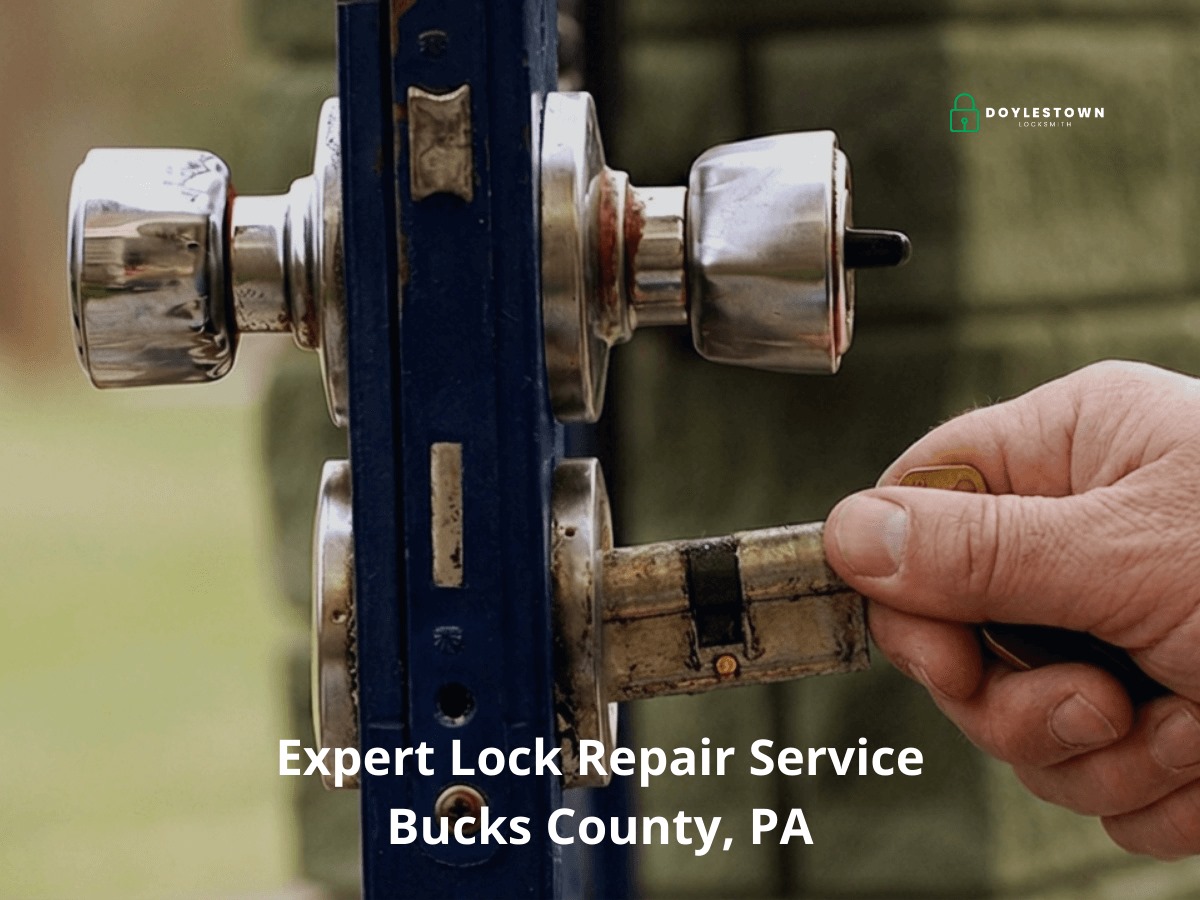
Signs your lock needs repair (before it fails completely)
Most lock failures don’t happen suddenly. They give you warning signs – sometimes for weeks or months before they quit entirely. Here’s what to watch for:
Obvious warning signs
Your key is hard to insert or remove. If you have to wiggle your key to get it in or out of the lock, something inside the cylinder is misaligned, worn, or obstructed. This will only get worse.
You have to jiggle the key to make it turn. The key goes in fine, but you have to move it around – up, down, side to side – before it finally turns. This usually means worn pins or springs inside the lock cylinder.
The lock makes grinding or clicking sounds. Locks should operate smoothly and quietly. If you hear grinding, clicking, or scraping sounds when you turn your key, internal components are wearing against each other incorrectly.
Your deadbolt doesn’t extend smoothly. A properly functioning deadbolt should slide in and out smoothly when you turn the key or thumb turn. If it’s sticky, catches, or requires force, something is wrong with the bolt mechanism or alignment.
The lock feels loose or wobbly. If the entire lock assembly moves when you turn the key, or if the cylinder spins more than it should, mounting screws are loose or internal components are failing.
Your key gets stuck in the lock. Having to tug or wiggle your key to remove it means the pins aren’t releasing properly, or the cylinder is binding.
Subtle warning signs (catch these early)
The key turns but the bolt doesn’t move. This means the connection between the cylinder and the bolt mechanism has failed – a serious problem that requires immediate attention.
You need extra force to turn the key. If locking or unlocking requires more effort than it used to, internal wear is increasing friction. This is progressive – it will continue getting harder until it fails.
The lock works, but feels rough. Even if it functions, a lock that doesn’t operate smoothly is telling you something is wearing out inside.
Your door doesn’t close flush with the frame. If you have to lift, push, or pull the door to get the lock to engage, the problem might be door/frame alignment rather than the lock itself – but it’s causing excessive stress on the lock mechanism.
You need WD-40 every week. If your lock only works properly when constantly lubricated, you’re treating symptoms, not the problem. Something inside needs repair or replacement.
Urgent warning signs (get help now)
Your key broke inside the lock. Not only are you locked in or out, but you now have a broken key piece stuck in the cylinder that needs extraction.
The cylinder spins 360 degrees. If the cylinder rotates freely without catching, the internal mechanism is completely broken. The lock provides zero security in this state.
The deadbolt is stuck extended. You can’t retract the deadbolt to open the door. This is an emergency situation requiring immediate professional help.
You can’t lock or unlock from inside or outside. If the lock won’t operate from either side, you have a serious failure that compromises security.
Visible damage from break-in attempt. Any lock that’s been attacked – pry marks, drill damage, forced entry attempts – must be professionally inspected, even if it still technically works.
Your smart lock is completely unresponsive. If changing batteries doesn’t fix it and reset procedures don’t work, you likely have a hardware or circuit board failure.
If you’re experiencing any of these issues, it’s time to have your lock professionally evaluated.
When lock problems happen - real situations we see every day
Let’s talk about the actual scenarios that bring people to call us:
The morning frustration locked. Every single morning, you’re running late, juggling coffee and bags, and your front door lock decides to be difficult. Key won’t turn smoothly. You have to jiggle it. Sometimes you swear at it. It’s a small frustration that starts every day on the wrong foot. You keep telling yourself you’ll get it fixed, but somehow you never do – until the day it fails completely and you’re actually locked out.
The insecurity deadbolt. You lock your deadbolt every night before bed. But it doesn’t extend all the way anymore. You can push it back in with your finger. You lie in bed wondering if someone could actually force it open. Is your family really safe? The uncertainty eats at you. You need it fixed, not just for function, but for peace of mind.
The post-break-in damage. Someone tried to force your door last week. The police came, filed a report, and told you how lucky you were that your lock held. But it didn’t hold perfectly – there’s damage. The cylinder is loose, the key doesn’t turn right, and every time you lock up now, you remember that someone tried to break in. You need this lock fixed or replaced so you can feel secure again.
The house you just bought. You’re excited about your new home. But that front door lock? It’s clearly been there for 20 years. The key is hard to get in and out. The deadbolt is sticky. The previous owner obviously never maintained it. You want it working properly before it fails and causes problems.
The smart lock that’s not so smart anymore. You loved your electronic keypad lock – no keys, just punch in the code. But now it’s acting up. Sometimes it works, sometimes it doesn’t. You’ve changed the batteries three times. You’ve reset it twice. You don’t know if it’s the electronics, the mechanical parts, or both. You’re stuck between modern technology and old-fashioned lock problems.
The high-traffic business door. You run a retail shop. Your front door gets opened and closed 50+ times a day, often roughly by employees or customers in a hurry. The lock is showing serious wear. It’s getting harder to operate. You can’t afford for it to fail during business hours and trap customers inside or lock you out of your own store.
The office door that won’t be secure. Last night you locked up your office like always. This morning you discovered the door was slightly ajar – the lock never fully engaged. Now you’re worried. Did the lock fail? Was anything taken? You need it fixed immediately so your client files and equipment are actually secure.
The panic bar that’s not smooth. Your business has an emergency exit with a panic bar. Lately it’s been sticking – you have to push hard to get it to release. This is a fire safety issue. If there’s an emergency and people can’t get out quickly, you could have serious liability. Plus, it might be a code violation. You need it repaired by a professional, not just “fixed” with WD-40.
Sound familiar? These are real situations we handle regularly.
How locks fail and why
Understanding what actually goes wrong inside a lock helps you make better decisions about repair versus replacement. Here’s a quick education on lock anatomy and common failure points:
Basic lock anatomy
A typical door lock has several key components:
The cylinder is the part that rotates when you insert and turn your key. Inside the cylinder are pins and springs that align with your key’s unique cuts. When the correct key is inserted, all the pins align at the “shear line,” allowing the cylinder to turn.
The bolt or latch is the metal piece that extends into the door frame to secure the door. Deadbolts extend a solid bolt. Spring latch locks have an angled latch that springs back when you close the door.
The strike plate is the metal plate on the door frame where the bolt or latch enters. Proper alignment between the bolt and strike plate is critical for smooth operation.
The cam or tailpiece is the piece that connects the rotating cylinder to the bolt mechanism, transferring the turning motion into bolt extension/retraction.
When any of these components wear out, misalign, or break, your lock stops working properly.
Common causes of lock failure
Normal wear and tear: Locks are mechanical devices with moving parts. Pins wear down, springs lose tension, cylinders develop internal scoring from years of key insertion and turning. A residential lock used twice daily can last 15-25 years. A high-traffic commercial lock might show significant wear in just 5-7 years.
Poor installation or alignment: If a lock was installed incorrectly or if your door/frame has settled or shifted over time, the bolt and strike plate may not align properly. This causes the lock to bind, require force, or not fully engage. The misalignment accelerates wear on all components.
Weather and environmental damage: Exterior locks face rain, humidity, temperature swings, and in winter, freezing. Moisture can cause rust and corrosion. Freezing can crack components or freeze the mechanism solid. Even interior locks in humid environments can corrode over time.
Key-related problems: Worn keys that no longer cut cleanly, poorly cut duplicate keys, or using the wrong key (even once) can damage pins inside the cylinder. Forcing a key that doesn’t fit easily can bend pins or springs.
Forced entry attempts: Even if a break-in attempt fails, it can damage the lock cylinder, bend the bolt, crack the housing, or loosen the entire assembly. A lock that “survived” a break-in attempt may no longer provide adequate security.
Lack of maintenance: Locks need occasional lubrication with proper lock lubricant (not WD-40, which attracts dirt). Without maintenance, internal components can bind, corrode, or wear prematurely.
Electronic component failure: Smart locks and electronic locks have circuit boards, keypads, motors, and sensors that can fail due to battery leakage, power surges, moisture infiltration, or just manufacturing defects.
Understanding why your lock failed helps determine whether repair makes sense or if replacement is the better option.
Repair or replace: making the right choice
This is the big question: should you repair your existing lock or replace it entirely? Here’s how to think through the decision:
When repair makes sense
The lock is relatively new (less than 10 years old) with an isolated problem. If a quality lock has one failing component – a worn cylinder, weak springs, misalignment – repair can extend its life for many more years.
It’s a high-quality lock worth preserving. If you have a premium lock that cost $300-500, spending $200-300 on repair makes economic sense. You’re preserving a quality security investment.
The problem is minor or fixable. Simple issues like loose screws, misalignment, worn strike plate, or needing fresh pins and springs are all repairable. You’re looking at 30-60 minutes of work and moderate cost.
Repair costs significantly less than replacement. If repair costs 40-50% or less than buying and installing a new comparable lock, repair is usually the smart choice.
Security hasn’t been compromised. If the lock still provides adequate security once repaired, there’s no reason to replace it.
When replacement is better
The lock is old (15+ years) with significant wear throughout. When multiple components are worn – cylinder, springs, bolt mechanism – you’re not really “repairing” so much as rebuilding. At that point, replacement makes more sense.
It’s a low-quality lock to begin with. If the original lock was a cheap builder-grade lock that cost $100, spending $200 to repair it doesn’t make sense. Invest in a quality replacement instead.
The lock has been compromised. After a break-in attempt, even if the lock still functions, you can’t trust its integrity. Replacing it (and upgrading security) is the right move for peace of mind.
You want to upgrade security. Maybe your current lock is Grade 3 (basic security). Repair keeps it at Grade 3. But for similar money, you could install a Grade 1 high-security lock. The upgrade is worth it.
Repair costs approach replacement costs. If repair would cost 70% or more of what a new lock costs, replacement is smarter. You get a brand new lock with full warranty for just a bit more money.
You want modern features. If your mechanical lock works but you want smart lock features (keypad entry, remote access, activity logs), you need replacement, not repair.
We’re honest about this decision. We don’t push replacement if repair makes sense, and we don’t waste your money repairing a lock that should be replaced. We explain the situation, give you options, and help you make the best choice for your security and budget.
For situations where replacement is the better option, check our lock installation and lock changes services for complete information.
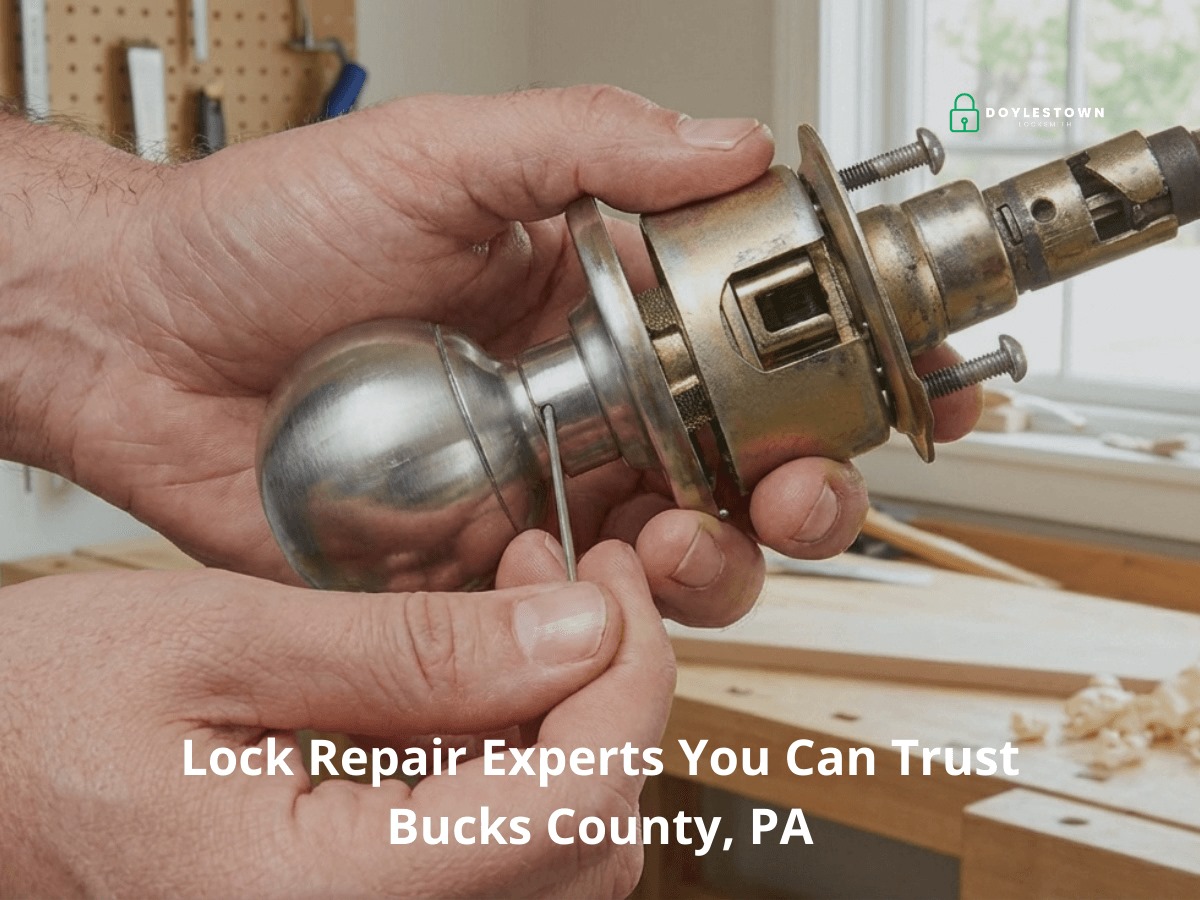
Types of lock repairs we handle
Residential lock repair
Front door deadbolts and entry locks: The most common repairs involve worn cylinders, sticky bolts, loose assemblies, and misalignment issues. We repair or replace cylinders, install fresh pins and springs, adjust strike plates, and ensure smooth operation.
Back door and side door locks: These often get less attention than front doors but are just as important for security. We handle the same range of repairs to ensure all entry points are properly secured.
Garage entry door locks: The door between your garage and house is a critical security point. We repair locks on this door and ensure it provides the security barrier it should.
Bedroom and bathroom privacy locks: When interior privacy locks fail, they’re more than inconvenient – they’re awkward. We repair or replace these quickly, often while handling other locks in your home.
Sliding door locks: Patio and sliding door locks have unique mechanisms that require specific expertise. We repair latch assemblies, mortise locks, and security bar systems.
Storm door and screen door locks: These lightweight locks take a beating from weather and frequent use. We repair or replace them to keep your entry secure.
For comprehensive residential locksmith services beyond just repairs, including rekeying and full security assessments, visit our residential locksmith page.
Commercial lock repair
Storefront and entrance locks: High-traffic commercial doors need locks that can handle hundreds of cycles per day. We repair commercial-grade locks, adjust door closers that affect lock alignment, and ensure smooth operation.
Office door locks: Individual office doors, conference rooms, and secure areas all need functioning locks. We handle everything from simple keyed locks to electronic access control components.
Panic bars and exit devices: These life-safety devices must work smoothly in emergencies. We repair panic bars, exit devices, and ensure they meet fire code requirements while providing security.
File cabinets and desk locks: Lost keys, broken locks, and jammed mechanisms on office furniture are common problems we solve quickly.
Gate and fence locks: Commercial properties often have security gates with locks exposed to weather. We repair these hardworking locks and recommend weather-resistant solutions.
High-security and restricted keyway systems: When your business uses specialized high-security locks, we have the expertise and authorization to repair them properly.
For complete commercial locksmith services including master key systems and access control, see our commercial locksmith page.
Emergency lock repair
Post-break-in repairs: After attempted forced entry, we provide emergency response to assess damage, repair or replace locks, reinforce strike plates, and restore your security immediately.
Locks damaged by frozen weather: Winter can freeze lock mechanisms solid or crack components. We provide emergency repair to get you back inside and functioning.
Broken key extraction and cylinder repair: When keys break off inside locks, we extract them and repair any damage to the cylinder, often same-day.
Complete lock failure: When a lock fails entirely – won’t lock or unlock from either side – we provide emergency service to resolve the issue and restore security.
Need emergency lock repair after hours? Our emergency locksmith service operates 7 days a week, 8 AM to 10 PM.
Our lock repair process
Here’s exactly what happens when you call us for lock repair:
You call us at +1 267-440-6484 and describe what’s happening with your lock. Is it sticking? Won’t lock? Was it damaged in a break-in? The more detail you provide, the better prepared we can be.
We ask a few questions. What type of door is it (entry, interior, commercial)? When did the problem start? Has it been getting progressively worse? Is this preventing you from securing your property?
We dispatch a mobile technician. Our fully-equipped van heads to your location with the tools and common parts needed for most repairs. We come to your home or business – you don’t bring locks to us.
We inspect thoroughly. Our technician doesn’t just look at the lock. We examine the entire door, frame, alignment, strike plate, and surrounding hardware. Often what seems like a lock problem is actually a door alignment issue, or vice versa.
We explain what we find. We’ll show you what’s wrong, explain what’s causing it, and discuss options. If it’s repairable, we’ll explain what that involves and quote a price. If replacement makes more sense, we’ll explain why and quote that option too.
You decide. We never pressure you. We give you the information to make an informed decision. You choose whether to repair, replace, or think about it.
We do the work. Once you approve, we proceed with the repair. Most lock repairs take 30-60 minutes. Complex jobs or commercial hardware may take longer. We’ll give you a time estimate upfront.
We test everything. We don’t just fix the lock and leave. We test it multiple times from both sides, ensure smooth operation, check alignment, and verify it’s providing proper security.
We clean up and advise. We clean up any debris, provide maintenance tips, and if relevant, advise on when you might need replacement in the future (so you’re not caught off guard).
You get documentation. We provide a receipt, warranty information if applicable, and our contact info in case you have any follow-up questions.
Where we provide lock repair service
Our mobile service brings master key system design, installation, and maintenance directly to your facility.
We serve all of Bucks County, PA and surrounding areas including:
- Doylestown
- Warminster
- Warrington
- Chalfont
- New Britain
- Furlong
- Jamison
- Richboro
- Montgomeryville
- Telford
- Quakertown
- Hatboro
- Willow Grove
- Horsham
- Southampton
- Newtown
- Yardley
- Langhorne
Lock repair questions answered
How much does lock repair typically cost?
The cost depends on the type of lock, the nature of the problem, and whether any parts need to be replaced. A simple adjustment is a very different job from repairing a damaged mechanism after a break-in or reprogramming a malfunctioning smart lock.
Because we can’t accurately quote a repair without seeing the lock first, we always provide a free on-site assessment before any work begins. Our technician will diagnose the issue and give you a clear, upfront price — so you know exactly what you’re paying before we touch anything.
What we can tell you is that repair is very often the more affordable option compared to full lock replacement — and in many cases, a properly repaired lock performs just as well as a new one.
We’ll always give you an honest recommendation on whether repair or replacement makes more sense for your specific situation.
Can you repair any type of lock?
We repair most standard mechanical locks, electronic locks, and smart locks commonly found in homes and businesses. If a lock is extremely old, obscure, or has proprietary parts no longer available, replacement may be the only option. We’ll be honest about what’s possible.
How long does lock repair take?
Most repairs take 30-60 minutes once we arrive. Simple adjustments might take 20 minutes. Complex commercial hardware or extensive damage might take 90+ minutes. We’ll give you a time estimate after inspection.
Is lock repair covered by warranty?
Repairs we perform come with a workmanship warranty. If there’s a problem with our work, we’ll make it right at no charge. If your lock itself is still under manufacturer warranty, we can often perform warranty-covered repairs if we’re authorized for that brand.
Should I try to repair the lock myself?
For minor issues like lubrication or tightening visible screws, DIY is fine. But for anything involving disassembling the lock, replacing internal components, or addressing security concerns, professional repair is smarter. Incorrect DIY repair can damage the lock further, compromise security, or void warranties.
What if the lock breaks again after you repair it?
If the same problem recurs shortly after our repair, we’ll come back and address it under our workmanship warranty. If a different component fails later (which can happen with older locks), that’s a separate issue we’ll handle fairly.
Can you repair locks if I don't have keys?
Yes. If you’ve lost keys or the lock is malfunctioning so badly that keys don’t work, we can still access and repair the lock. In many cases, we can also rekey it for you while we’re there. Check our lock rekeying service for more information.
Do you repair car door locks?
We focus on residential and commercial property locks. For automotive lock issues, see our automotive locksmith services.
Will repairing my lock make it as good as new?
A quality repair can restore full function and security. However, if the lock has significant overall wear, repair addresses the immediate problem but doesn’t reverse aging throughout the entire mechanism. That’s why we’re honest about repair vs. replacement – sometimes a new lock is the better long-term value.
What if multiple locks need repair?
We can assess and repair multiple locks in one visit, which saves you service call fees. We’ll prioritize repairs based on security importance and give you a comprehensive quote.
Do you carry replacement parts with you?
Our mobile vans stock common lock parts – pins, springs, cylinders, strike plates, and more. For unusual locks or specialized parts, we may need to order them, but we can often complete the repair on our first visit.
After a break-in, should I repair or replace my locks?
We strongly recommend professional assessment. Even if the lock still functions, internal damage may have compromised security. Often replacement with upgraded high-security locks is the right choice after a break-in. We’ll inspect thoroughly and give you honest advice.
Get your locks repaired today
Don’t wait for a failing lock to leave you locked out or compromised. If your locks are showing warning signs, get them professionally assessed and repaired now – while it’s convenient, not urgent.
Call now: +1 267-440-6484
When you call, please tell us:
- Your location
- Type of lock and door (entry deadbolt, commercial storefront, etc.)
- What problem you’re experiencing
- Whether this is preventing you from securing your property
The more information you provide, the better prepared we’ll be to solve your problem efficiently.