
Safe opening services in Bucks County, PA
Non-destructive methods first
Residential and commercial safes
Gun safes
Licensed and insured
The passport you need for a flight tomorrow morning is inside. Or the combination was written on a card that you have not been able to find for three days. Or a family member passed away and left a safe that no one in the household knows how to open.
Safe lockouts sit in a different category from other lock problems. The urgency is often higher, the anxiety is real, and the stakes of doing it wrong, damaging the safe, destroying the lock mechanism, or activating a relocker, are more significant than with a door lock.
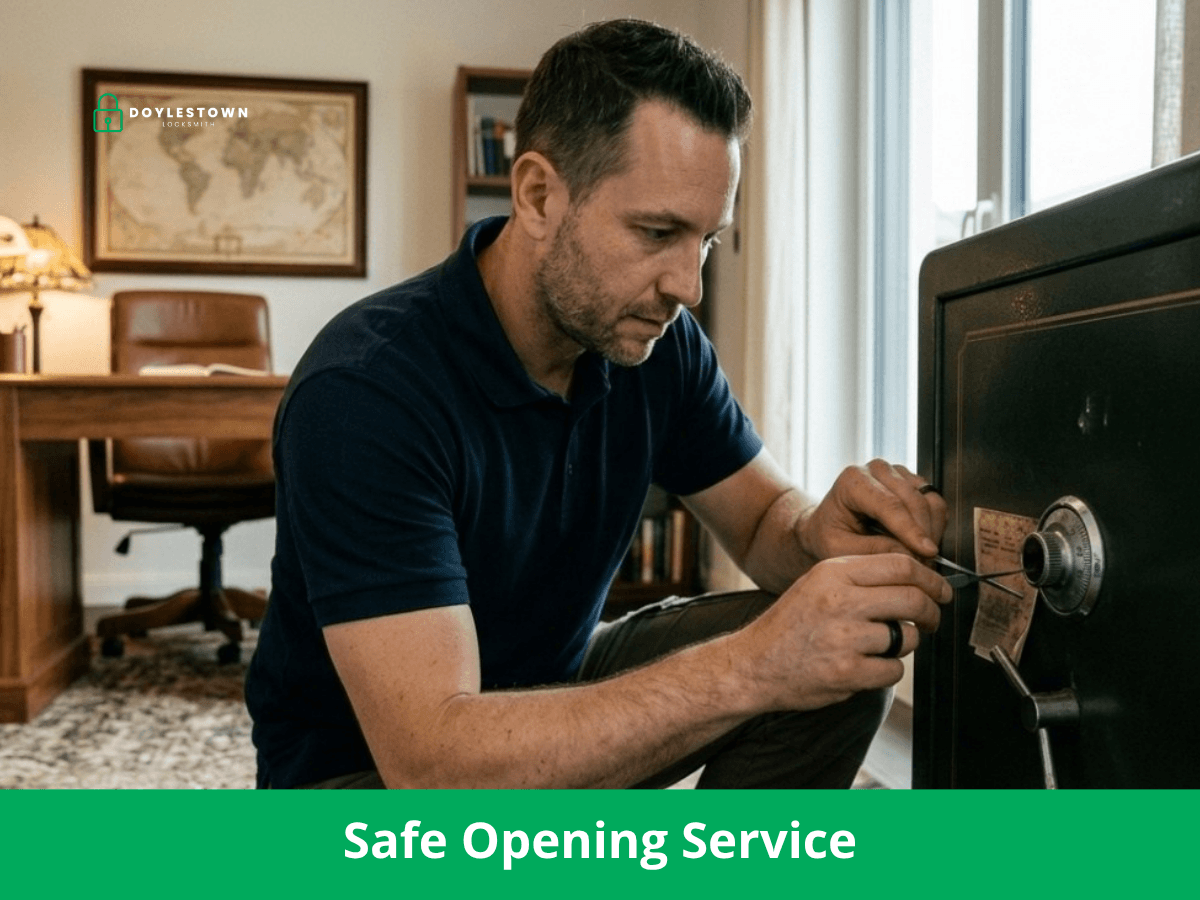
Doylestown Locksmith opens safes for residential and commercial customers throughout Bucks County. We use non-destructive techniques whenever the safe and lock type allow for it, and when drilling is necessary we tell you that before we start and explain why. We verify ownership before opening any safe. And we do not walk away once the door is open without addressing what comes next.
Call 267-440-6484 for immediate help or request a free quote if your situation is not urgent.
The situations that bring people to this page
Most safe lockouts fall into one of a few categories. Knowing which one applies to you helps us prepare before we arrive.
Forgotten combination
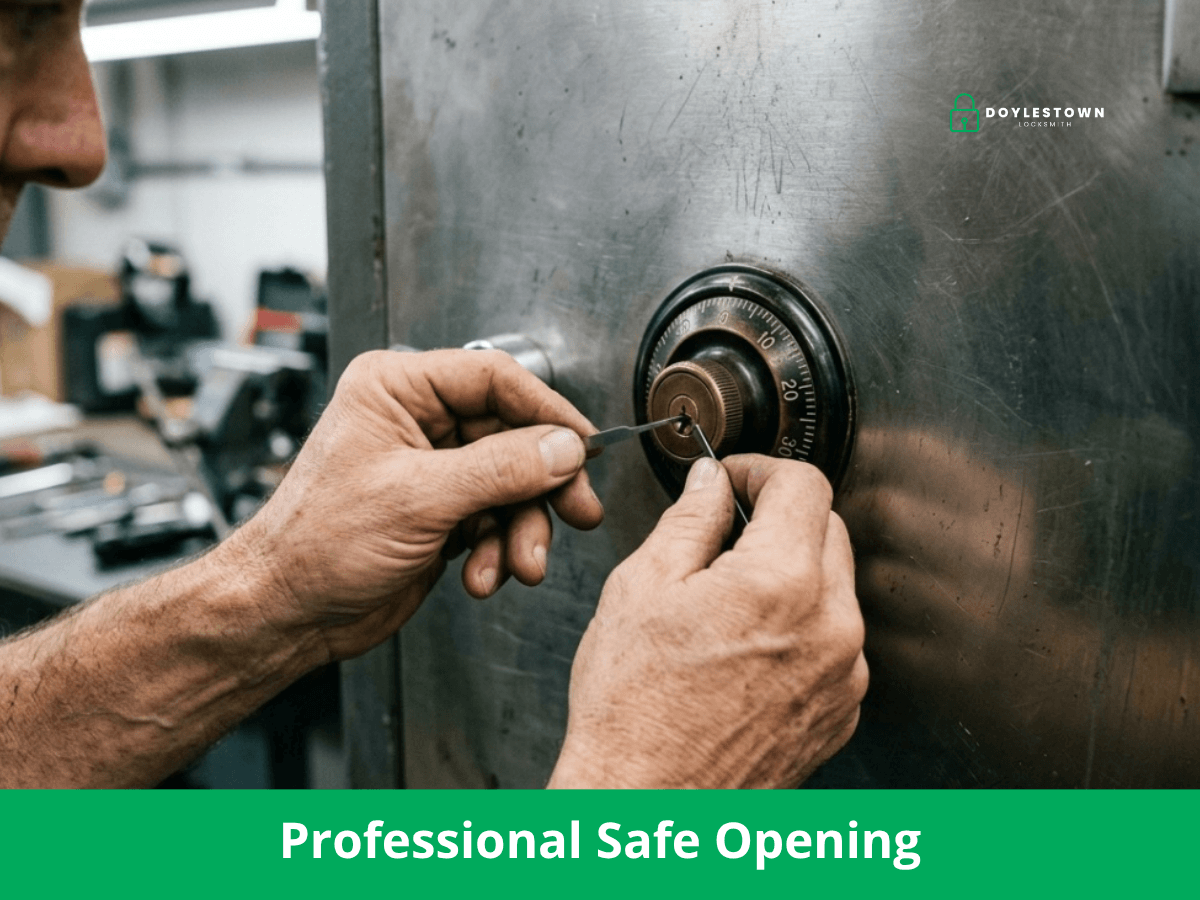
The most common situation we encounter. You set the combination when you bought the safe, wrote it somewhere, and now neither the combination nor the paper it was written on can be found. For dial combination locks, a skilled technician can sometimes manipulate the lock by listening to the mechanism and deducing the combination without any physical damage to the safe. That process takes patience and the right tools, but when it works the safe remains fully functional afterward. Whether manipulation is viable depends on the safe model and lock type, which we assess before committing to an approach.
Electronic keypad failure or forgotten code
Electronic safes fail for several reasons. A dead battery is the most common and the easiest to address if the safe has an external battery terminal. A keypad that has malfunctioned internally, a circuit board that has failed, or a code that has genuinely been forgotten are more involved. We diagnose the specific failure mode before recommending an approach, because the solution for a dead battery is different from the solution for a failed keypad controller.
Lost key on a key-locked safe
Safes with key locks, whether as the primary mechanism or as a secondary override, can be opened by a locksmith with the right tools for that lock type. In some cases we can create a replacement key if the lock serial number is accessible. In other cases we open the safe and replace the lock entirely.
Mechanically failed lock
A lock that functioned correctly and then stopped, without any change in combination or key, usually indicates an internal mechanical failure. Bolt work that has jammed, a relocker that activated unexpectedly, or internal components that have worn past reliable function are all situations we encounter. These require assessment to determine whether the failure is repairable without drilling or whether the lock needs to be bypassed and replaced.
Inherited or unknown safe
An older safe in a property that was purchased or inherited, a safe from a closed business, or a unit that was in the home when you moved in. The combination was never known to the current owner, and there is no documentation. These situations are entirely normal and we handle them regularly. We verify that you are the property owner or authorized representative before beginning any work, then assess the safe to determine the most appropriate opening strategy.
How we open safes: manipulation versus drilling
The most important thing to understand about professional safe opening is that there is not a single method. The approach depends on the safe, the lock mechanism, and the nature of the failure. Getting this decision right is what separates a locksmith who works on safes regularly from one who treats every opening as a drilling job.
Safe manipulation
Manipulation is the process of opening a combination lock without knowing the combination, using specialized listening equipment or direct mechanical feedback to determine where each wheel in the combination stops. When it works, the safe opens without any damage to the lock or the door. The combination itself is not changed, the locking mechanism is intact, and the safe is fully functional after the opening.
Manipulation is not always possible. It requires a specific type of combination mechanism, a lock that is not damaged or deliberately obstructed, and enough time to work through the process carefully. On consumer-grade safes from brands like Sentry or Liberty it is often viable. On high-security commercial safes with additional countermeasures it may not be.
When we assess your safe, we tell you upfront whether manipulation is likely to work before we spend time attempting it.
Precision drilling
When manipulation is not viable, drilling is the controlled removal of material at a specific point in the safe door to access the lock mechanism or bolt work directly. Done correctly by someone who knows the construction of the specific safe, drilling is a precise operation that opens the safe without destroying the contents or causing unnecessary additional damage.
Drilling does leave a hole in the door that will need to be repaired or covered. In most cases the lock itself needs to be replaced after a drill opening. We tell you this before we start and explain what the repair or replacement will involve. We do not recommend drilling as a first step unless there is no reasonable alternative.
Electronic bypass and battery access
For electronic safes with dead batteries, many models have an external battery terminal under the keypad or on the door face that allows you to temporarily power the keypad from an external source and enter your code. If this applies to your safe, we can walk you through it on the phone before dispatching a technician. If the failure is beyond a dead battery, we assess the keypad, the controller board, and the bolt mechanism to determine the appropriate approach.
Types of safes we open
Home safes
Fireproof document safes, floor safes, wall safes, biometric units, and standard combination or key-lock boxes. The most common brands we work with in residential settings are Sentry, Liberty, First Alert, and SentrySafe. Each has a different internal construction, and knowing the brand and model in advance helps us come prepared with the right tools and approach.
Gun safes
Gun safes require particular care during the opening process because of what is inside. We handle the contents of any safe, including firearms, with the same care we would apply to any valuable and sensitive item. Before we begin, we confirm you are the owner and that the firearms are legally owned.
Gun safes are frequently built with more robust locking systems than standard home safes, including relockers that engage automatically if the bolt mechanism is tampered with. Activating a relocker during an improper opening attempt can make subsequent access significantly more difficult and expensive. We assess the safe model and lock type before attempting any entry to avoid triggering this mechanism inadvertently.
Common gun safe brands we work with include Liberty, American Security, Fort Knox, Browning, and Stack-On.
Commercial and business safes
Cash management safes, deposit safes, fireproof document safes, and vault-style units for retail, restaurant, office, and medical facility use. Commercial safes often have higher security ratings and more complex locking mechanisms than residential units, and the urgency is frequently higher because access to the safe is tied to business operations. We treat commercial safe calls as priority situations and respond promptly. See our commercial locksmith service for the full range of commercial security work we provide.
Electronic and digital keypad safes
Many modern home and office safes use digital keypads rather than combination dials or keys. These safes are generally easier to open when the failure is a dead battery and more complex when the electronic components themselves have failed. We carry diagnostic tools for common electronic safe systems and can often determine the failure mode on arrival before committing to an opening method.
Proof of ownership: what to expect and why it matters
We verify ownership before opening any safe. This is not a formality or an obstacle, it is the standard that distinguishes a responsible locksmith from one who will open anything for anyone who calls.
What we look for depends on the situation. For a home safe, a photo ID showing the address where the safe is located is usually sufficient. For an inherited safe or one purchased with a property, a title document, deed, or estate document works. For a business safe, documentation showing your role at the company and authority over the premises.
If you are not sure what documentation applies to your situation, call us and describe it. We will tell you what we need before we dispatch. There is no scenario where we will open a safe based purely on someone telling us it is theirs.
If you have the serial number of your safe, write it down before you call. Some manufacturers can verify ownership through their records and may have override procedures for certain models. We can help you explore that option if it applies.
What happens after the safe is open
Getting the safe open is the first problem. What comes next depends on what caused the lockout and what condition the safe and lock are in after opening.
Combination reset
If the safe was opened by manipulation and the mechanism is intact, we can reset the combination to a new code of your choosing before we leave. We recommend writing the new combination in at least two separate secure locations and, if the safe allows, registering it with the manufacturer.
Lock replacement
If the opening required drilling, or if the lock mechanism was the source of the failure and is no longer functional, the lock needs to be replaced. We carry replacement locks for common safe brands and can install a new combination or electronic lock in most residential safe bodies. For commercial safes requiring manufacturer-specific replacement components, we will tell you what is needed and either source the part or direct you to the appropriate channel.
Electronic keypad replacement
A failed electronic keypad on a digital safe can often be replaced with a compatible unit without drilling the safe body. If the keypad controller has failed but the bolt mechanism is intact, a keypad replacement restores full function. We assess this after opening to confirm the bolt work and internal components are undamaged before recommending a keypad replacement.
Relocation or replacement
If the safe is damaged beyond repair or no longer provides the level of security it was purchased for, we can advise you on replacement options. While we don’t sell safes directly, we can advise you on what to look for based on your storage needs and security requirements.
Common questions about safe opening
Will opening damage my safe?
It depends on the method required. Manipulation leaves no damage. Electronic bypass on a safe with a dead battery leaves no damage. Drilling leaves a hole that requires repair or lock replacement. We tell you which method applies to your situation before we start and explain the tradeoffs. Our goal is always the least invasive approach that actually works for your specific safe.
How long does a safe opening take?
It varies significantly by safe type and opening method. A dead battery situation on an electronic safe can be resolved in fifteen minutes. Combination manipulation on a residential dial safe typically takes 30 to 90 minutes depending on the lock. Drilling a more complex commercial safe takes longer still. We give you an honest estimate after assessing the safe, not a generic window.
Can you open a safe without any combination or documentation?
Technically yes, but we will not do so without proof that you have the right to access it. Safe opening without ownership verification is not a service we provide. If you have inherited a safe, purchased a property with a safe, or are otherwise the rightful owner but do not have typical documentation, call us and explain the situation. We work through those cases individually.
What if my electronic safe has a dead battery?
Many electronic safes have an external battery terminal, usually under the keypad or on the front face of the door, that lets you apply temporary power from a standard 9-volt battery. If this applies to your model, you may be able to open it without calling a locksmith at all. Call us first and we will walk you through it. If that does not apply to your safe or does not resolve the issue, we dispatch and assess the electronic system on arrival.
Can you open a gun safe?
Yes. We open gun safes from Liberty, American Security, Fort Knox, Browning, Stack-On, and other common brands. Gun safes are built with more robust locking systems and in some cases include relockers that must be handled carefully during opening. We assess the model before beginning and choose the approach that avoids triggering secondary locking mechanisms unnecessarily.
Do you repair the safe after opening it?
We address the immediate lock or access issue as part of the service call. If the safe needs a new lock, combination reset, or keypad replacement, we handle that before we leave where possible. If the damage is more extensive or requires manufacturer parts, we will tell you what the next step is and whether it is something we can source or something you will need to go to the manufacturer for.
Locked out of a safe?
Call 267-440-6484. We serve residential and commercial customers throughout Bucks County. If your situation is not urgent, request a free quote online and we will get back to you the same day.